Analyzing Shifts in User Interface Designs for Enhanced Accessibility in Slot-Based Entertainment Systems
Anna Brooks · May 27, 2026
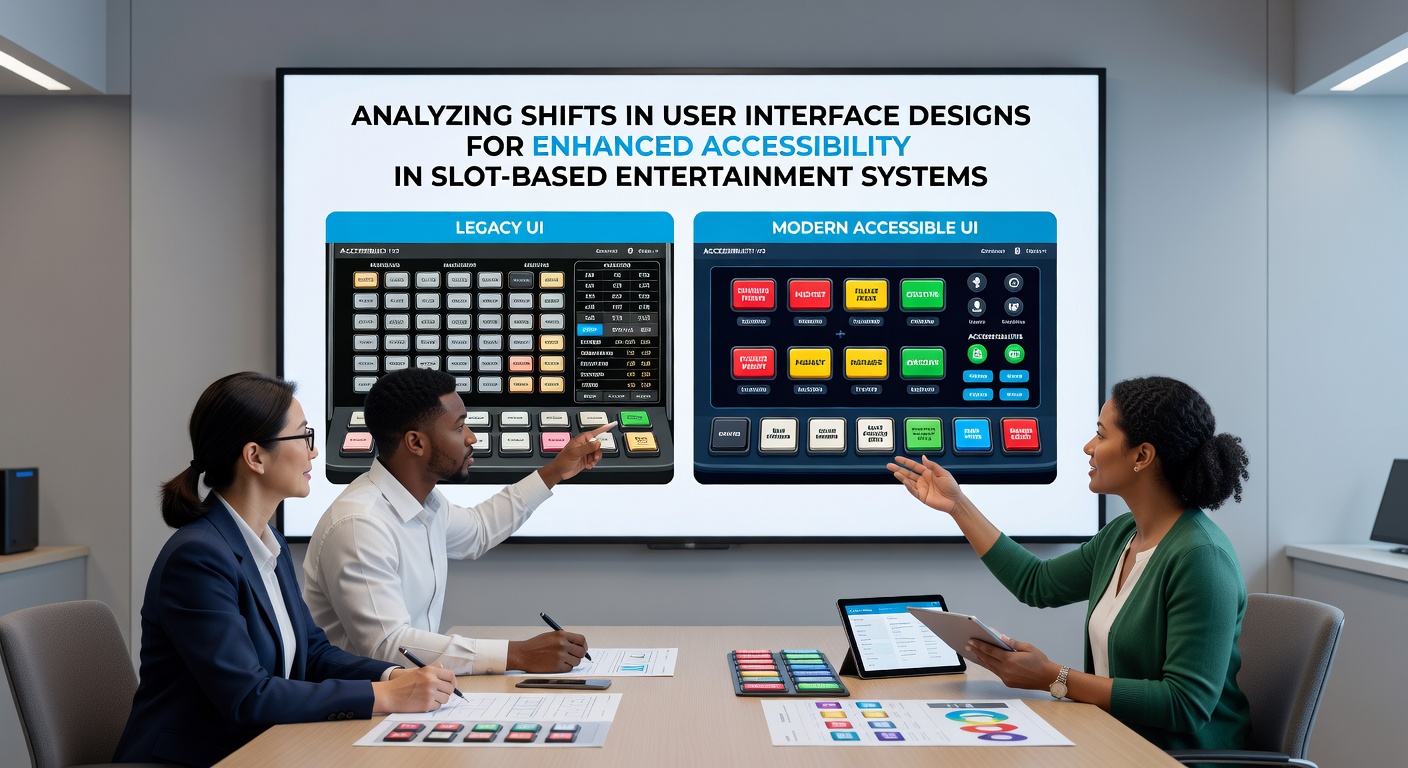
Analyzing Shifts in User Interface Designs for Enhanced Accessibility in Slot-Based Entertainment Systems
Developers in the slot-based entertainment sector have directed increasing attention toward user interface modifications that address diverse player needs, with changes driven by regulatory requirements and technological capabilities that emerged prominently after 2020. These adjustments encompass adjustments to color palettes, navigation structures, and input methods, allowing systems to accommodate users who rely on assistive technologies such as screen readers or alternative input devices.
Core Elements of Recent Interface Adjustments
Interface modifications in slot systems now incorporate scalable text sizes, adjustable contrast ratios exceeding standard WCAG thresholds, and audio cue enhancements that replace or supplement visual indicators. Research from the University of Nevada's gaming technology division indicates that these features appeared in approximately 35 percent of new installations across North American markets by early 2025. Systems also integrate haptic feedback patterns that convey reel outcomes through controller vibrations, a development tested extensively in both land-based and digital platforms.
Voice navigation commands have entered testing phases in several jurisdictions, with prototypes allowing players to select paylines or initiate spins without physical contact. Data collected through pilot programs in Australian venues shows that such controls reduced session interruption rates for users with motor impairments by measurable margins. Adaptive layouts further respond to device orientation changes and user preference settings stored across sessions, maintaining consistency whether accessed via dedicated terminals or mobile applications.
Regulatory and Standards Alignment
Government agencies have issued updated guidelines that directly influence design priorities. The Canadian Accessibility Standards Development Organization published revised technical specifications in late 2024 that require slot interfaces to support at least four distinct contrast modes and full keyboard operability. These rules take full effect across federally regulated gaming facilities in May 2026, prompting manufacturers to accelerate compliance updates ahead of the deadline.
European operators meanwhile reference the EN 301 549 standard when procuring new equipment, a framework that mandates compatibility with common assistive software packages. Compliance documentation submitted to oversight bodies now includes audit reports detailing how each interface element meets measurable performance criteria, shifting procurement processes away from purely aesthetic evaluations toward documented accessibility benchmarks.
Implementation Patterns Across Markets
Manufacturers have introduced modular interface components that operators can activate or customize based on venue requirements. One documented rollout at a major Las Vegas property involved retrofitting 1,200 terminals with software layers that permit real-time adjustment of animation speeds and sound profiles. Observers noted that these layers operated independently of core game mathematics, preserving regulatory certification while expanding usability options.

Similar patterns appear in online slot networks where server-side rendering allows dynamic delivery of accessible versions without separate application builds. Reports from industry testing laboratories confirm that latency increases remain below perceptible thresholds when these accessibility layers activate. Integration with external devices such as switch controllers and eye-tracking systems has also progressed, supported by standardized APIs that game studios adopted after 2023.
Measurement and Ongoing Evaluation
Operators track accessibility feature utilization through anonymized session logs that record activation frequency and duration. Figures released by the Gaming Policy and Enforcement Branch of British Columbia reveal that contrast adjustment tools saw consistent monthly usage increases throughout 2025. These metrics feed into iterative design cycles where developers refine default settings based on aggregate player behavior rather than assumptions.
Independent accessibility audits conducted by certified third parties now form part of standard pre-launch procedures. Findings from such audits often highlight remaining gaps in dynamic content labeling, prompting targeted code revisions before wider deployment. The process continues as new assistive technologies reach market availability and slot platforms incorporate corresponding support.
Conclusion
Interface evolution in slot-based systems reflects sustained coordination between engineering teams, regulatory authorities, and standards organizations. Updates scheduled for May 2026 in multiple regions will likely accelerate adoption of remaining accessibility provisions, while ongoing data collection supports further refinements. These developments establish measurable baselines that future designs can reference and improve upon.