Examining Data Encryption Standards and Their Influence on Secure Transactions Within Portable Gaming Applications
Mia Neumann · Jun 3, 2026
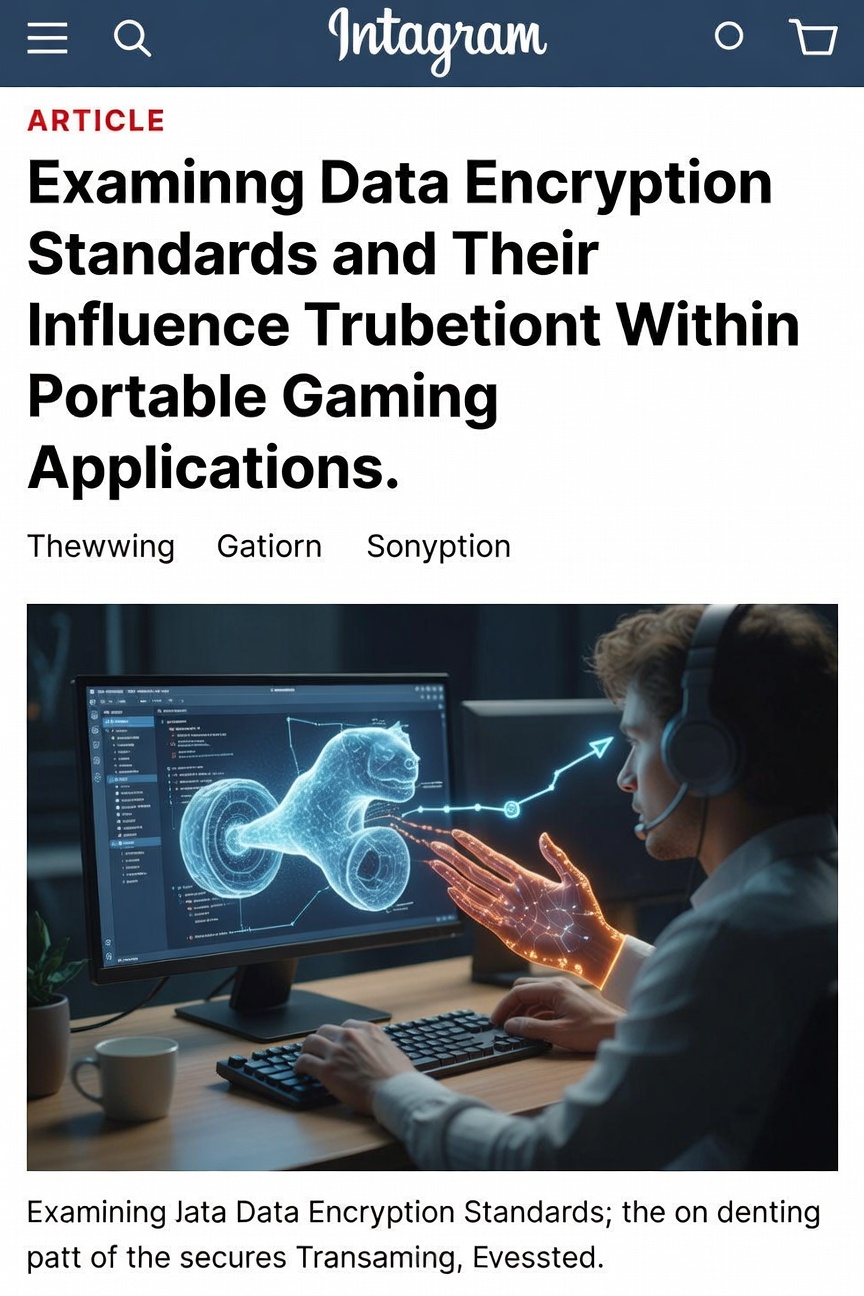
Examining Data Encryption Standards and Their Influence on Secure Transactions Within Portable Gaming Applications
Portable gaming applications handle millions of financial transactions each day, and data encryption standards form the backbone of those operations. Standards such as AES-256 and RSA-2048 protect user credentials, payment details, and session data during transfers between mobile devices and remote servers. Industry reports indicate that adoption of these protocols has grown steadily since 2020, driven by regulatory requirements and the expansion of in-app purchase systems.
Core Encryption Protocols in Mobile Environments
AES remains the dominant symmetric cipher across gaming platforms because it balances speed with security on resource-constrained devices. Researchers at the National Institute of Standards and Technology have documented performance benchmarks showing AES-256 processes blocks in under one millisecond on modern smartphone chipsets while maintaining resistance to known cryptanalytic attacks. Asymmetric methods like RSA and elliptic-curve variants handle key exchange and digital signatures, allowing applications to verify server identities before any sensitive information moves across networks.
Transport Layer Security version 1.3 now serves as the default protocol for most portable titles, replacing earlier versions that carried vulnerabilities such as weak cipher suites. Data from government cybersecurity agencies in Canada and Australia show that TLS 1.3 reduces handshake latency by approximately 30 percent compared with TLS 1.2, which improves user experience during real-time purchases without sacrificing confidentiality.
Impact on Transaction Integrity and Compliance
Secure transactions depend on end-to-end encryption that prevents interception between the application and payment processors. When standards are implemented correctly, payment tokens replace actual card numbers, and session keys rotate frequently to limit exposure windows. Observers note that jurisdictions including the European Union and several U.S. states require documented encryption audits before operators receive or renew licenses for real-money features.
Figures released in early 2026 by the Australian Cyber Security Centre indicate that applications using current standards experienced 78 percent fewer reported data incidents than those still operating on legacy protocols. Compliance frameworks now reference specific algorithm suites, forcing developers to update libraries and retire deprecated functions on predictable schedules.

Challenges in Implementation Across Diverse Devices
Fragmented hardware ecosystems create ongoing difficulties for uniform deployment. Older Android devices may lack hardware acceleration for certain ciphers, forcing software fallbacks that consume additional battery and processing time. iOS environments enforce stricter API access, which reduces certain attack surfaces yet limits developer flexibility in custom implementations.
Studies from academic institutions in the European Union have examined how side-channel leaks can occur when encryption routines share processor caches with graphics rendering threads common in gaming engines. Mitigation strategies include constant-time algorithms and isolated secure enclaves now present in flagship chipsets released after 2024.
Developments Expected Through Mid-2026
Post-quantum cryptography preparations continue at standards bodies, with draft specifications circulating for algorithms designed to withstand future quantum attacks. Although large-scale deployment remains years away, several portable gaming publishers have begun testing hybrid schemes that combine classical and post-quantum key exchanges in non-production environments. June 2026 marks the scheduled release of updated implementation guidelines from NIST that will likely influence certification requirements for financial modules embedded in mobile applications.
Industry associations representing game developers have started publishing reference architectures that integrate hardware-backed keystores with application-level encryption layers. These resources help smaller studios meet the same security thresholds previously achievable only by large platform holders.
Regulatory and Technical Convergence
Cross-border operations require alignment between differing national standards. Canadian federal guidance and Singaporean cybersecurity directives both emphasize mutual recognition of AES implementations validated under the Cryptographic Module Validation Program. This convergence reduces redundant testing while maintaining assurance levels demanded by payment networks.
Continuous monitoring tools now feed encryption telemetry into centralized dashboards, allowing operators to detect configuration drift before it affects live transactions. Automated certificate rotation systems have cut manual intervention rates by more than half in organizations that adopted them during 2025.
Conclusion
Data encryption standards directly shape the reliability and regulatory acceptance of financial interactions inside portable gaming applications. AES, RSA, and TLS 1.3 collectively provide the cryptographic foundation that supports expanding transaction volumes while satisfying oversight from agencies across multiple continents. Ongoing updates scheduled through 2026 reflect a measured transition toward stronger primitives without disrupting existing user experiences. As device capabilities and threat landscapes evolve, the same standards bodies and research communities continue to refine requirements that keep mobile gaming transactions confidential and intact.